
Pipeline Safety Inspections
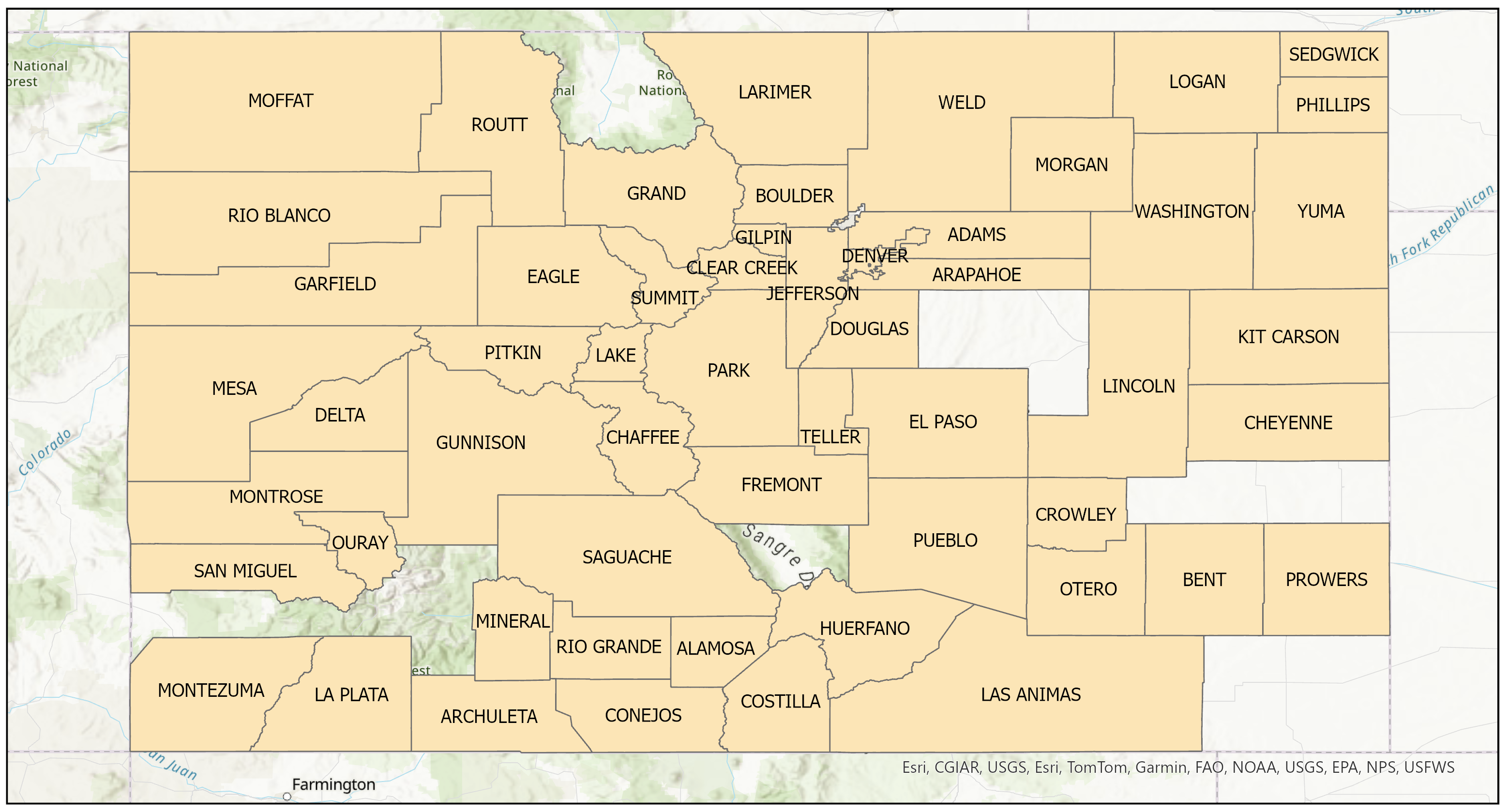
2024 Pipeline Safety Program Inspection Coverage
PUC's Pipeline Safety Program has performed audits and inspections in all of these counties in 2024. A county highlighted in yellow can mean an inspector was there in person or that records were reviewed remotely.
What’s involved with an Inspection and how often are they conducted?
There are multiple types of inspections conducted by the PUC and each has a different series of steps. PSP follows PHMSA’s guidelines for PSP inspections.
- Records Inspections - Examine an operator’s program-wide plans (drug, alcohol, public awareness, control room management, and damage prevention programs, etc). These are generally performed as record reviews and do not require a field visit.
- Field inspections - conducted on-site at various stages of the system, including design, construction and maintenance.
- Master meter and Liquid Petroleum Gas Operator (MMO/LPG) inspections could include field and record or just record inspections, depending on the compliance status.
- Incident/Event - Incident - Federally defined term referenced in 49 CFR 191.3. Event is a state defined term referenced in 4 CCR 723-11102.
- Compliance Issue - Violations determined by inspections, audits, and/or testing that indicate a deficiency or deficiencies with respect to rule requirements.
Frequency of inspections occurs at intervals and based on state and federal guidelines to ensure a successful program and safe pipeline system. They can range from immediate response to every five years. Majority of inspection intervals fall between 2 to 5 years. These are based on operator risk assessments and PHMSA guidelines.
What does an Incident or Event mean?
Event
(A) an unplanned/emergency event that occurs on the pipeline system that results in the evacuation of 50 or more people from a normally occupied building or property;
(B) an unplanned/emergency event that occurs on the pipeline system that results in the closure of all lanes in either direction of a roadway or railroad;
(C) an unplanned/emergency event that occurs on the pipeline system that results in the evacuation of four or more residential structures;
(D) an unplanned/emergency event that occurs on the pipeline system that results in a service outage of 100 or more customers;
(E) an event that requires active soil vapor extraction for a period exceeding 48 hours as measured from the time the extraction device is turned on at the site until the operator determines soil vapor extraction is no longer necessary;
(F) a MAOP-exceedance event that requires the operator, pursuant to its procedures, to implement follow-up actions such as a leak survey; or
(G) an event that, in the opinion of the operator, requires courtesy notification to the PSP.
Incident
(1) An event that involves a release of gas from a pipeline, gas from an underground natural gas storage facility (UNGSF), liquefied natural gas, liquefied petroleum gas, refrigerant gas, or gas from an LNG facility, and that results in one or more of the following consequences:
(i) A death, or personal injury necessitating in-patient hospitalization;
(ii) Estimated property damage of $149,700 or more, including loss to the operator and others, or both, but excluding the cost of gas lost. For adjustments for inflation observed in calendar year 2021 onwards, changes to the reporting threshold will be posted on PHMSA's website. These changes will be determined in accordance with the procedures in appendix A to part 191.
(iii) Unintentional estimated gas loss of three million cubic feet or more.
(2) An event that results in an emergency shutdown of an LNG facility or a UNGSF. Activation of an emergency shutdown system for reasons other than an actual emergency within the facility does not constitute an incident.
(3) An event that is significant in the judgment of the operator, even though it did not meet the criteria of paragraph (1) or (2) of this definition.
Inspection Results
This provides information to obtain inspection information. As per CRS 40-15-107, information obtained through audit is protected from Colorado's open records law, therefore any interim data or supporting data that was part of an audit, inspection, or investigation is not available for public viewing. In the event exact inspection results are needed, you may request a copy of the inspection results and report through PHMSA at this link. You will be required to submit a Freedom of Information Act (FOIA) request. Instructions for this process can be found at this link.